Wander Deeper, Not Farther
Travel is no longer just about checking destinations off a list. Today’s explorers seek meaningful connection, cultural resonance, and moments that linger long after the journey ends. With overtourism straining iconic sites and climate concerns reshaping priorities, the smart traveler chooses intention over itinerary. This shift isn’t about sacrificing adventure—it’s about enhancing it. By focusing on immersive experiences, informed destination choices, and practical strategies, travelers can unlock richer narratives and more authentic encounters. The path forward is not longer, but deeper.
The Quiet Revolution in Travel
Across the globe, a quiet transformation is redefining what it means to journey well. No longer measured by the number of passport stamps or Instagram check-ins, modern travel increasingly values presence over performance. According to the United Nations World Tourism Organization, international arrivals surpassed 1.4 billion in 2019, but the strain on cultural and natural heritage sites has become impossible to ignore. Venice, Machu Picchu, and Kyoto’s Arashiyama district now implement daily visitor caps to protect their integrity. Meanwhile, UNESCO reports that over 50% of World Heritage Sites face threats from unsustainable tourism pressures. These numbers reflect a growing imbalance—one that travelers themselves are beginning to correct.
What has changed is not the desire to explore, but the purpose behind it. Today’s travelers are less interested in ticking off landmarks than in forming genuine relationships with places and people. A 2023 survey by the Global Sustainable Tourism Council found that 68% of travelers aged 30 to 55 prioritize experiences that support local communities and minimize environmental impact. This demographic, often balancing family responsibilities with personal renewal, seeks trips that offer depth, not distraction. They are not escaping life; they are enriching it. The emotional payoff lies not in the photo, but in the moment—the shared laughter with a market vendor, the sunrise over a quiet village, the stillness found in an ancient forest.
This values-driven shift reflects a broader cultural reevaluation of what constitutes a meaningful life. In a world saturated with digital noise and relentless pace, travel has emerged as a sanctuary for mindfulness. The emphasis on experience over exhibition means travelers are spending more time in fewer places, engaging in local rituals, and choosing homestays over chain hotels. Research from the University of Geneva shows that immersive travel experiences lead to increased empathy, improved mood regulation, and a stronger sense of global interconnectedness. The quiet revolution is not loud, but its impact is profound—travel is becoming a practice of presence, not performance.
Choosing Places That Choose You Back
The most transformative journeys occur when there is mutual resonance between traveler and destination. This concept, often overlooked in traditional travel planning, centers on alignment—how a place’s cultural values, ecological rhythm, and community openness align with the traveler’s intentions. Instead of asking “Where do I want to go?”, the deeper question becomes “Where would welcome me, and how can I honor that welcome?” This mutual suitability fosters a relationship rather than a transaction, creating space for reciprocity and respect.
To identify such destinations, travelers can use frameworks that go beyond aesthetics. The Global Sustainable Tourism Council (GSTC) offers a certification system that evaluates destinations on environmental protection, socio-economic benefits to local communities, and cultural preservation. Places like Slovenia, recognized as the world’s first green destination, or Bhutan, which measures prosperity through Gross National Happiness, exemplify this ethos. These destinations do not merely tolerate visitors—they curate them. Their tourism models prioritize quality of engagement over quantity of arrivals, ensuring that every visitor contributes positively to the local ecosystem.
Seasonality also plays a crucial role in alignment. Traveling during shoulder seasons—not peak, not dead—offers access to authentic rhythms without the congestion. In the Balkans, for instance, visiting Albania’s Accursed Mountains in late May allows travelers to witness shepherds moving flocks along ancient trails, a tradition largely invisible during the crowded summer months. Similarly, exploring Japan’s satoyama villages—rural landscapes where forests meet farmland—in early autumn reveals harvest festivals and food preservation rituals that are central to community life. These moments are not staged for tourists; they are lived experiences made accessible through timing and intention.
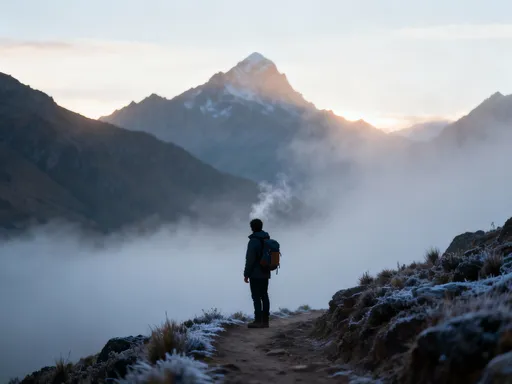
Emerging regions also offer profound alignment opportunities. Ecuador’s Andean highlands, with their network of community-run eco-lodges and indigenous-guided treks, have seen a 22% increase in responsible tourism since 2020, according to Ecuador’s Ministry of Tourism. Yet, visitor density remains low, and ecological balance is actively maintained through reforestation programs and water conservation initiatives. Travelers who choose such places not only gain access to unspoiled beauty but become participants in sustainability. The destination, in turn, values their presence as a contribution, not a cost. This mutual recognition—of dignity, of care, of shared purpose—is the foundation of deep travel.
The Architecture of Immersive Days
A well-lived travel day is not one filled to the brim, but one shaped with intention. The architecture of immersion begins with rhythm—an understanding that discovery thrives not in haste, but in space. The most memorable experiences often arise not from packed itineraries, but from pauses, repetitions, and the quiet unfolding of daily life. In Kyoto, for example, visitors who return to the same tea house each morning begin to notice subtle shifts—the angle of light on tatami mats, the variation in the host’s greeting, the seasonal change in the wagashi sweets. These details form a narrative that cannot be rushed.
The ideal exploratory day integrates slow mornings, sensorial pauses, and openness to the unplanned. Starting with a local breakfast—steamed buns from a Taipei night market vendor, freshly baked bread from a Lisbon padaria—grounds the traveler in the present. These acts of routine, often overlooked in pursuit of the extraordinary, are themselves the fabric of authenticity. A mid-morning walk without a fixed destination allows for serendipitous discoveries: a street musician in Havana, a hidden courtyard in Fez, a family-run olive press in Tuscany. These moments are not found on maps, but in tempo.
Case studies reveal the impact of daily structure on memory and meaning. In Oaxaca, Mexico, travelers who participate in market walks with local families report higher levels of cultural understanding and emotional connection than those who visit the same markets independently. The difference lies not in the location, but in the pacing and perspective. Guided by a resident, the journey includes stops for introductions, explanations of ingredients, and shared tastes of chapulines (grasshoppers). This rhythm—stop, engage, reflect—creates mental space for absorption, transforming observation into experience.
Practical strategies support this architecture. Staying in a single base, rather than hopping between cities, allows travelers to develop familiarity. Neighborhood anchoring—walking the same streets repeatedly—builds intimacy. Off-hour access, such as visiting a museum at opening time or a temple at dawn, reduces crowds and enhances focus. These choices are not about avoiding popular sites, but about engaging with them more deeply. When the mind is not cluttered with logistics, it becomes receptive to the subtle—the scent of rain on cobblestones, the sound of a language spoken at home, the warmth of a shared smile. In this stillness, immersion flourishes.
Beyond the Guidebook: Mapping Hidden Touchpoints
Authenticity often resides beyond the reach of algorithms and curated feeds. While digital platforms offer convenience, they also homogenize experience, funneling travelers toward the same cafes, viewpoints, and photo ops. To discover the soul of a place, one must step off the digital grid and engage with analog sources of insight. Community boards in local libraries, municipal cultural calendars, and neighborhood workshops offer gateways to experiences that are not monetized, but lived.
One of the most powerful tools for discovery is curiosity itself. A traveler in coastal Portugal who asks a fisherman about his nets might learn that retired nets are being repurposed into woven textiles by a women’s cooperative in the village. This “frugal innovation”—a small, resourceful practice rooted in tradition—reveals layers of cultural resilience and creativity. Such moments do not appear on TripAdvisor, but they are often the most transformative. They connect the visitor to the ingenuity of daily life, where necessity breeds beauty and community.
Methods for accessing these hidden touchpoints are simple but intentional. Talking to librarians, for instance, can yield recommendations no search engine can match. In Granada, Spain, a local librarian might suggest attending a free flamenco rehearsal in a community center, where raw emotion trumps performance. Free walking tours led by residents, rather than licensed guides, often include personal stories and lesser-known alleys. These tours are not about showcasing highlights, but about sharing home. Attending public events—town meetings, school plays, craft fairs—allows travelers to witness civic life in motion, not as spectators, but as respectful guests.
Another underused resource is the local newspaper. A small article about a seasonal festival or a neighborhood clean-up effort can lead to unexpected participation. In Kyoto, a mention of a bamboo weaving demonstration at a senior center led one traveler to spend an afternoon learning from 80-year-old artisans—hands moving with precision, voices sharing stories of post-war recovery. These interactions are not designed for tourists; they are invitations extended to those who show up with humility and interest. The guidebook provides orientation, but the real map is drawn through connection.
The Language of Belonging (Without Fluency)
Language is more than communication—it is recognition. Even a rudimentary effort to speak the local tongue signals respect and openness. Sociolinguistic research confirms that politeness markers—such as greetings and expressions of gratitude—lower social barriers and increase the likelihood of positive interaction. In many cultures, the attempt matters more than accuracy. A smile paired with “konnichiwa” in Japan, “gracias” in Peru, or “terima kasih” in Indonesia opens doors that might otherwise remain closed.
The psychological impact of minimal language use is profound. When a traveler greets a shopkeeper in their native language, it shifts the dynamic from transactional to relational. The vendor is no longer a service provider, but a fellow human being acknowledged in their own context. This small act fosters trust. A study by the Max Planck Institute found that non-native speakers who used basic local phrases were 40% more likely to receive personalized recommendations and informal invitations—such as joining a family meal or attending a private ceremony.
A micro-toolkit of five phrases can transform a journey. “Hello,” “Thank you,” “How are you?”, “Excuse me,” and “Where do you recommend?” form a foundation of connection. In Laos, a traveler who asked this final question in Lao was invited to a village festival, seated among elders, and offered a wooden flute made by hand. In Romania, a simple “bună ziua” at a rural market led to an invitation to help harvest potatoes and share a stew cooked over an open fire. These moments are not in brochures; they are born of respect.
Technology can support this effort without replacing it. Translation apps are useful, but they should not eliminate the attempt. Saying a phrase first, then confirming with an app, shows effort and humility. Writing phrases in a journal reinforces memory and intention. The goal is not fluency, but presence. When language becomes a bridge rather than a barrier, belonging becomes possible—not as a resident, but as a welcomed guest.
Packing Light, Traveling Wide: The Minimal Payload Strategy
Packing is not just a logistical task—it is a philosophical one. What we carry shapes how we move, how we engage, and ultimately, how we experience. The minimal payload strategy is not about deprivation, but about liberation. By reducing physical load, travelers increase their capacity for spontaneity, openness, and presence. Skift’s 2023 Traveler Stress Index found that each additional kilogram in luggage correlates with an 11% increase in perceived stress, particularly in destinations with stairs, cobblestones, or limited public transport.
A disciplined packing list enhances freedom. Essentials include one versatile jacket (water-resistant, layerable), two mixable outfits in neutral tones, one pair of comfortable walking shoes, and a single journal. These items allow for adaptability across climates and occasions. Over-packing, on the other hand, leads to fatigue, logistical anxiety, and a sense of being burdened—both physically and mentally. A traveler lugging three pairs of shoes and five outfits is less likely to take a last-minute invitation to a hilltop shrine or a riverside picnic.
The benefits of light packing extend beyond convenience. With less gear, there is more room for souvenirs of the mind—stories, scents, silences. A folded map from a kind stranger, a pressed flower from a mountain path, a phrase written in local script—these are the true keepsakes. Moreover, minimalism supports sustainability. Lighter luggage means lower fuel consumption in air travel, and fewer resources used in laundry and storage. According to the International Air Transport Association, reducing average baggage weight by 2 kilograms per passenger could save up to 3 million tons of CO2 annually.
Some travelers adopt the “one-bag challenge,” fitting everything into a carry-on. This constraint forces prioritization and clarity. It also eliminates the risk of lost luggage and the time spent at baggage claim. More importantly, it signals a mindset: the journey matters more than the things. When the body is unburdened, the mind is free to wander—deeper, wider, and with greater presence.
Returning Home Transformed: The Aftermath of True Travel
The journey does not end when the plane lands. For many travelers, the most profound changes occur in the weeks and months after returning home. This period, often overlooked, is when memories stabilize, insights crystallize, and travel begins to shape identity. A longitudinal study by the University of Geneva (2024) found that individuals who engaged in immersive travel—staying longer in fewer places, forming local connections, participating in daily life—reported a 19% increase in sustained life satisfaction compared to those who took conventional trips. The depth of experience translated into lasting well-being.
Integrating travel into daily life requires intention. One effective ritual is writing a return letter to the place visited. This practice, inspired by mindfulness traditions, allows travelers to express gratitude, reflect on growth, and acknowledge the people who shaped their journey. Another is cooking a dish learned abroad—perhaps a tagine from Morocco or a tamale from Oaxaca. The sensory act of preparation rekindles memory and honors the culture. Creating a sensory map—a collage of smells, textures, sounds, and colors from the trip—helps preserve the holistic experience beyond photographs.
These practices are not about nostalgia, but about continuity. They allow travelers to carry the outside world within, transforming fleeting moments into enduring values. A woman who volunteered at a community garden in Ecuador might start her own urban plot. A man who practiced morning meditation at a Kyoto temple might establish a daily ritual at home. The journey becomes a seed, not a souvenir.
Ultimately, deep travel is not about distance, but about depth—of connection, of presence, of transformation. It invites us to slow down, to listen, to belong without ownership. In a world that often measures success by speed and scale, choosing to wander deeper is a quiet act of resistance. It is a declaration that some things cannot be rushed, and that the richest destinations are not on maps, but within. The path forward is not farther. It is deeper.